
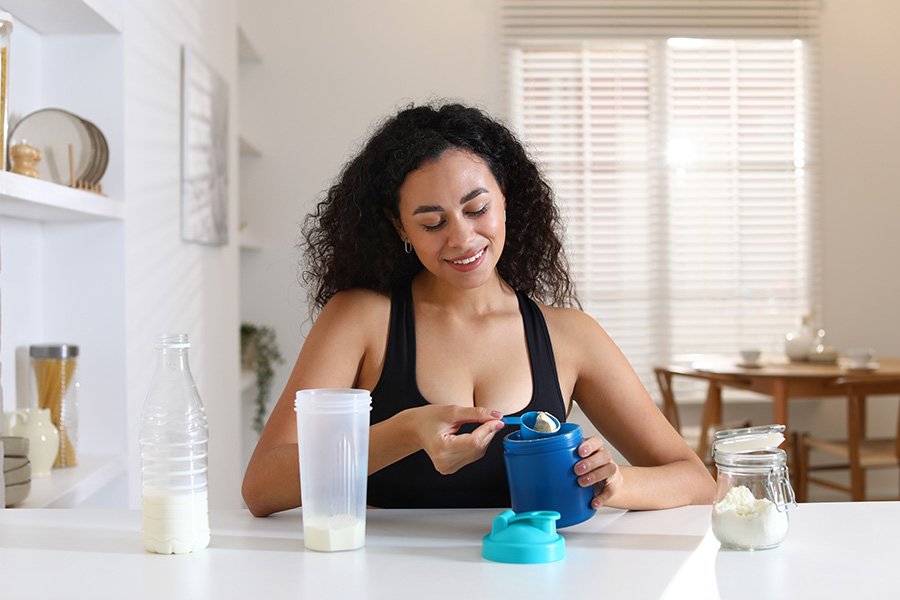
Protein provides amino acids—the essential building blocks of all your cells. Adequate protein:
- Supports muscle, joints, and connective tissue
- Promotes healthy ovulation and hormone production
- Maintains uterine lining and cervical mucus
- Balances blood sugar and prevents cravings
How Much Protein Do You Need?
- Women: 80–100 grams/day on average (adjust for body size and activity)
- Men: Generally require more for testosterone production
- Spread protein across the day: aim for 20–30 grams per meal
- Ideal times for extra protein: pre-workout, mid-afternoon snack, and before bed if blood sugar drops overnight
Tip: More protein isn’t always better—excess can convert to sugar, impacting weight and blood sugar balance.
Best Sources of Protein
Whole Food First:
- Grass-fed beef (3 oz = 20–25 g)
- Chicken breast (3 oz = 20 g)
- Wild-caught fish like salmon or cod (3 oz = 20 g)
- Eggs (1 egg = 5–6 g)
- Full-fat plain Greek yogurt (¾ cup ≈ 18 g)
- Cottage cheese (½ cup = 12–14 g)
- Lentils and beans (1 cup = 14–18 g)
- Nuts and seeds (small amounts = 3–5 g)
Protein Powder (Supplement Only):
- Whey: Complete amino acids, great for muscle; rotate if dairy-sensitive
- Collagen: Supports skin, joints, ligaments; incomplete amino acids—combine with other protein
- Plant-Based: Rice, pea, hemp, pumpkin seed, chia, flax—combine to get all essential amino acids
Rotation Tip: Rotate protein powders to support digestive health and diversify amino acids.
Protein to Avoid
Marketing Tricks:
- Protein foam, protein soda, protein beer – treat, not nutrition
- Sweetened protein powders or bars – high sugar, artificial sweeteners (stevia, monk fruit)
- Protein bars with high carbs – look for 1:1 or higher protein-to-carb ratio
Rule of Thumb: Protein should taste like protein. If it’s sweet on its own, it’s likely low-quality.
How to Balance Protein in Your Meals
Protein works best alongside:
- Healthy fats (cholesterol and fat are hormone building blocks)
- Carbohydrates (provide B vitamins essential for estrogen production)
- Vegetables (fiber, antioxidants, micronutrients)
Example Plate: Salmon (protein), quinoa (carb), avocado (fat), sautéed kale (vegetable)
Practical Protein Tips
- Audit your current protein intake—are you getting too little or too much?
- Spread protein evenly across breakfast, lunch, dinner, and snacks
- Use protein powder or bars only when food isn’t available
- Rotate sources: whole food, whey, collagen, plant-based
- Balance protein with carbs, fats, and veggies for hormone support
Key Takeaways
- Protein is essential for hormone production, ovulation, and fertility
- Women need moderate protein; more isn’t always better
- Prioritize whole food sources; supplement strategically
- Avoid overly processed, sweetened protein powders and bars
- Balance protein with fats, carbs, and vegetables for optimal hormone health
Resources & Next Steps
If you want help creating a personalized protein plan tailored to your hormone and fertility needs, a consultation with a fertility-focused nutrition expert can help.